Platform comparison
| Platform | YES odds | NO odds | Fee | KYC | Settlement | |
|---|---|---|---|---|---|---|
Polymarket (via Who Will Win 2026) Pick polygram.ink (preferred broker) |
96% | 4% | 0% (USDC on-chain) | No-KYC up to $1,500 | USDC, auto via UMA oracle | See live odds → |
Polymarket (direct) polymarket.com |
96% | 4% | 0% | Geo-blocked in US/UK/EU | USDC, on-chain | See live odds → |
Kalshi kalshi.com |
— | — | Up to 7% per trade | US-only, KYC required | USD | See live odds → |
Betfair Exchange betfair.com |
— | — | 2-5% commission | Full KYC from first trade | GBP / EUR | See live odds → |
Manifold Markets manifold.markets |
— | — | Play-money (mana) | None — play-money | Mana (no cash-out) | See live odds → |
Outcome probabilities
Current market-implied probability for each outcome, from the live order book.
| Outcome | Probability |
|---|---|
| August 22 | 96% |
| August 25 | 93% |
| August 31 | 83% |
| September 15 | 71% |
| September 30 | 56% |
Market context
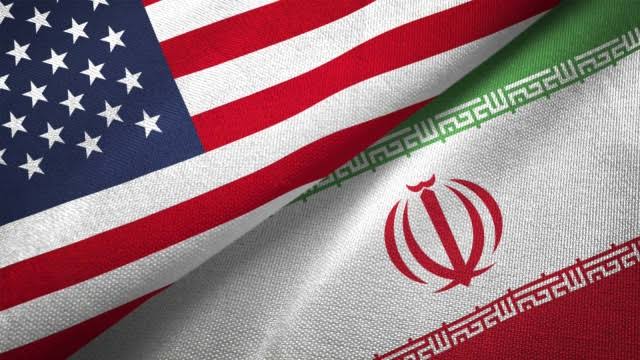
The market prices a 96% probability that the United States refrains from direct military strikes against Iran through September 2026. This reflects a ceasefire holding across roughly 21 months, with the settlement window capturing a period spanning multiple US political cycles and potential regional escalations.
Historical precedent suggests such high probabilities warrant scrutiny. The US conducted strikes on Iranian targets in January 2020 (following Soleimani's assassination) and April 2024 (in response to Iranian missile attacks on Israel), demonstrating that direct confrontation remains within the operational playbook despite diplomatic channels. The 1988 USS Vincennes incident and subsequent decades of proxy conflicts show that US-Iran military engagement typically follows specific triggering events—assassinations, attacks on American personnel, or regional allies under direct threat—rather than occurring randomly. The current pricing may underweight tail risks associated with escalation cycles, particularly if Israeli-Iranian tensions spike or if a US-backed ally faces Iranian direct action.
Traders should monitor several catalysts through mid-2026. The Trump administration's return to office in January 2025 introduces policy uncertainty; Trump withdrew from the JCPOA in 2018 and authorised the Soleimani strike. Congressional pressure regarding Iranian nuclear advancement, scheduled IAEA reporting milestones, and any Israeli military action against Iranian facilities could rapidly shift incentives. Regional flashpoints—particularly Yemen's Houthi movements, Iraqi militia activity, or Syrian developments—remain unpredictable vectors. The consensus heavily favours continued restraint, but the 4% underdog position captures genuine geopolitical volatility that historical patterns suggest should command higher compensation.
Methodology
This page reviews US-Iran ceasefire continues through 2026? across five venues. The live probability is the Polymarket mid-price, sourced directly from the on-chain Polygon order book; the comparison columns benchmark each venue on fee structure, KYC, settlement currency and payment rails. Every CTA routes to Who Will Win 2026, which mirrors the Polymarket order book at 0% fees.
Resolution & payout
At resolution the UMA oracle takes over: a proposer posts the outcome with a bond, any token holder can dispute within two hours. Without dispute the result is accepted and the smart contract distributes USDC instantly.
On Kalshi (CFTC-regulated) resolution runs through their in-house clearing engine in USD. Betfair Exchange settles after match end in the account's local currency. Manifold pays no cash — only its in-platform "mana" currency.
FAQ
- Where can I trade this market with the lowest fees?
- Polymarket is geo-blocked in the US/UK/EU. The easiest 0%-fee broker into the same order book is Who Will Win 2026. Kalshi charges up to 7% per trade; Betfair Exchange takes 2-5% commission on net winnings.
- What does Polymarket cost to trade?
- Polymarket itself charges 0% — the only cost is the Polygon network fee, typically under $0.01 per transaction. Off-chain venues like Kalshi or Betfair charge 2-7% commission.
- How fast are USDC deposits?
- Polygon credits deposits after 12 confirmations — usually under 30 seconds. Withdrawals follow the same path and land back in your wallet within minutes.
- Do I need to KYC for this market?
- On Polymarket directly, no — it's wallet-based. Intermediary brokers like Who Will Win 2026 trigger KYC only above $1,500 of lifetime trading volume; under that you trade pseudonymously with a single wallet address.
- How reliable are the quoted odds?
- The YES/NO percentages are the live mid-prices of the Polymarket order book. On deep markets they move every few seconds; on thinner ones you'll see short plateaus.
%22%2F%3E%3Cpath%20d%3D%22M%206%2066%20A%2026%2026%200%200%201%2058%2066%22%20fill%3D%22%23E6B98D%22%20opacity%3D%220.9%22%2F%3E%3Ccircle%20cx%3D%2232%22%20cy%3D%2226%22%20r%3D%2222%22%20fill%3D%22%23F5CBA7%22%2F%3E%3Cpolygon%20points%3D%2216%2C18%2020%2C4%2024%2C18%22%20fill%3D%22%23facc15%22%2F%3E%3Cpolygon%20points%3D%2224%2C18%2028%2C3%2032%2C18%22%20fill%3D%22%23facc15%22%2F%3E%3Cpolygon%20points%3D%2232%2C18%2036%2C3%2040%2C18%22%20fill%3D%22%23facc15%22%2F%3E%3Cpolygon%20points%3D%2240%2C18%2044%2C4%2048%2C18%22%20fill%3D%22%23facc15%22%2F%3E%3C%2Fsvg%3E) and
and%22%2F%3E%3Cpath%20d%3D%22M%206%2066%20A%2026%2026%200%200%201%2058%2066%22%20fill%3D%22%23E6B98D%22%20opacity%3D%220.9%22%2F%3E%3Ccircle%20cx%3D%2232%22%20cy%3D%2226%22%20r%3D%2222%22%20fill%3D%22%23F5CBA7%22%2F%3E%3Crect%20x%3D%2210%22%20y%3D%224%22%20width%3D%2244%22%20height%3D%2214%22%20rx%3D%227%22%20fill%3D%22%23facc15%22%20opacity%3D%220.9%22%2F%3E%3Crect%20x%3D%228%22%20%20y%3D%2218%22%20width%3D%228%22%20%20height%3D%2218%22%20rx%3D%224%22%20fill%3D%22%23facc15%22%20opacity%3D%220.7%22%2F%3E%3Crect%20x%3D%2248%22%20y%3D%2218%22%20width%3D%228%22%20%20height%3D%2218%22%20rx%3D%224%22%20fill%3D%22%23facc15%22%20opacity%3D%220.7%22%2F%3E%3C%2Fsvg%3E)
Trade US-Iran ceasefire continues through 2026? on Who Will Win 2026
Live order book, 0% fees, USDC settlement in seconds.
Open live market →