Platform comparison
| Platform | YES odds | NO odds | Fee | KYC | Settlement | |
|---|---|---|---|---|---|---|
Polymarket (via Who Will Win 2026) Pick polygram.ink (preferred broker) |
32% | 68% | 0% (USDC on-chain) | No-KYC up to $1,500 | USDC, auto via UMA oracle | See live odds → |
Polymarket (direct) polymarket.com |
32% | 68% | 0% | Geo-blocked in US/UK/EU | USDC, on-chain | See live odds → |
Kalshi kalshi.com |
— | — | Up to 7% per trade | US-only, KYC required | USD | See live odds → |
Betfair Exchange betfair.com |
— | — | 2-5% commission | Full KYC from first trade | GBP / EUR | See live odds → |
Manifold Markets manifold.markets |
— | — | Play-money (mana) | None — play-money | Mana (no cash-out) | See live odds → |
Outcome probabilities
Current market-implied probability for each outcome, from the live order book.
| Outcome | Probability |
|---|---|
| December 31 | 32% |
| November 30 | 27% |
| October 31 | 7% |
| August 15 | 0% |
| August 31 | 0% |
| August 12 | 0% |
| September 30 | 0% |
| August 22 | 0% |
| September 7 | 0% |
| September 14 | 0% |
| September 21 | 0% |
Market context
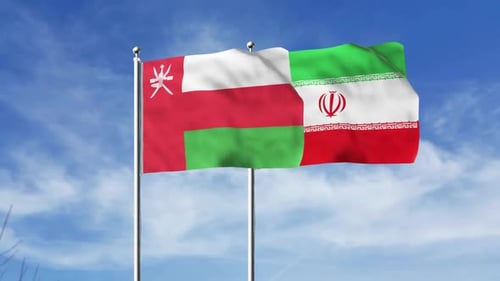
Traders on decentralised prediction markets give 32% probability to iran-oman hormuz management agreement by 2026?. This market will resolve to “Yes” if a diplomatic agreement between Oman and Iran over traffic in the strait of Hormuz is announced by the specified date, 11:59 PM ET. A diplomatic agreement refers t…
Methodology
We track Iran-Oman Hormuz Management Agreement by 2026? across the five venues with material prediction-market liquidity. The probability shown is the live Polymarket mid; the comparison rows summarise how each venue treats the underlying contract — fees, KYC thresholds, settlement currency, deposit options. The highlighted row marks the cheapest route into Polymarket's order book.
Resolution & payout
Polymarket-based markets settle through the UMA Optimistic Oracle on Polygon. A proposer submits the outcome, a two-hour challenge window opens, and unchallenged proposals finalise the resolution. Payouts settle automatically in USDC the moment the result is final — no bookmaker, no delay.
Kalshi-based markets settle in USD via the CFTC-regulated clearinghouse. Betfair Exchange settles in GBP/EUR net of commission. Manifold is play-money and does not pay out real funds.
FAQ
- Is this market available outside the US?
- Polymarket itself is geo-blocked in the US/UK/EU. Always check the legal status of prediction markets in your jurisdiction before trading.
- How does resolution work?
- Through the UMA Optimistic Oracle on Polygon: a proposer submits the outcome, a two-hour challenge window opens, and USDC payouts settle automatically once the result is final.
- What's the difference between YES and NO shares?
- A YES share pays $1.00 if the event happens, $0 otherwise. A NO share pays $1.00 if the event doesn't happen. The market price between 0¢ and 100¢ is the implied probability.
- What does Polymarket cost to trade?
- Polymarket itself charges 0% — the only cost is the Polygon network fee, typically under $0.01 per transaction. Off-chain venues like Kalshi or Betfair charge 2-7% commission.
- How reliable are the quoted odds?
- The YES/NO percentages are the live mid-prices of the Polymarket order book. On deep markets they move every few seconds; on thinner ones you'll see short plateaus.
%22%2F%3E%3Cpath%20d%3D%22M%206%2066%20A%2026%2026%200%200%201%2058%2066%22%20fill%3D%22%23E6B98D%22%20opacity%3D%220.9%22%2F%3E%3Ccircle%20cx%3D%2232%22%20cy%3D%2226%22%20r%3D%2222%22%20fill%3D%22%23F5CBA7%22%2F%3E%3Cpolygon%20points%3D%2216%2C18%2020%2C4%2024%2C18%22%20fill%3D%22%23facc15%22%2F%3E%3Cpolygon%20points%3D%2224%2C18%2028%2C3%2032%2C18%22%20fill%3D%22%23facc15%22%2F%3E%3Cpolygon%20points%3D%2232%2C18%2036%2C3%2040%2C18%22%20fill%3D%22%23facc15%22%2F%3E%3Cpolygon%20points%3D%2240%2C18%2044%2C4%2048%2C18%22%20fill%3D%22%23facc15%22%2F%3E%3C%2Fsvg%3E) and
and%22%2F%3E%3Cpath%20d%3D%22M%206%2066%20A%2026%2026%200%200%201%2058%2066%22%20fill%3D%22%23E6B98D%22%20opacity%3D%220.9%22%2F%3E%3Ccircle%20cx%3D%2232%22%20cy%3D%2226%22%20r%3D%2222%22%20fill%3D%22%23F5CBA7%22%2F%3E%3Crect%20x%3D%2210%22%20y%3D%224%22%20width%3D%2244%22%20height%3D%2214%22%20rx%3D%227%22%20fill%3D%22%23facc15%22%20opacity%3D%220.9%22%2F%3E%3Crect%20x%3D%228%22%20%20y%3D%2218%22%20width%3D%228%22%20%20height%3D%2218%22%20rx%3D%224%22%20fill%3D%22%23facc15%22%20opacity%3D%220.7%22%2F%3E%3Crect%20x%3D%2248%22%20y%3D%2218%22%20width%3D%228%22%20%20height%3D%2218%22%20rx%3D%224%22%20fill%3D%22%23facc15%22%20opacity%3D%220.7%22%2F%3E%3C%2Fsvg%3E)
Trade Iran-Oman Hormuz Management Agreement by 2026? on Who Will Win 2026
Live order book, 0% fees, USDC settlement in seconds.
Open live market →