Platform comparison
| Platform | YES odds | NO odds | Fee | KYC | Settlement | |
|---|---|---|---|---|---|---|
Polymarket (via Who Will Win 2026) Pick polygram.ink (preferred broker) |
8% | 92% | 0% (USDC on-chain) | No-KYC up to $1,500 | USDC, auto via UMA oracle | See live odds → |
Polymarket (direct) polymarket.com |
8% | 92% | 0% | Geo-blocked in US/UK/EU | USDC, on-chain | See live odds → |
Kalshi kalshi.com |
— | — | Up to 7% per trade | US-only, KYC required | USD | See live odds → |
Betfair Exchange betfair.com |
— | — | 2-5% commission | Full KYC from first trade | GBP / EUR | See live odds → |
Manifold Markets manifold.markets |
— | — | Play-money (mana) | None — play-money | Mana (no cash-out) | See live odds → |
Market context
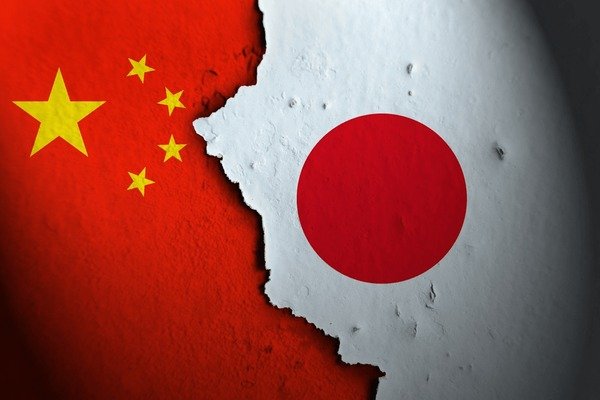
A direct military clash between Chinese and Japanese forces remains the underlying event, defined by the use of force such as missile strikes or gunfire, rather than mere diplomatic friction. The market currently prices this outcome at an 8% implied probability, positioning the “No” side as the clear favourite. Historical precedents, including the 2014 East China Sea Air Defence Identification Zone dispute and repeated near-misses over the Senkaku Islands, show that while tensions frequently spike, they rarely escalate into open combat. These comparable cases suggest the consensus view is reasonable, yet a contrarian angle exists if Taiwan-related contingencies trigger Japan’s new security legislation, which permits force when an ally faces an existential threat.
Traders should monitor three specific catalysts: Tokyo’s announcements on missile deployment near Taiwan, Beijing’s retaliatory rhetoric following Japanese defence minister Shinjiro Koizumi’s timeline for Yonaguni island systems, and any shifts in US-Japan defence coordination. Koizumi recently confirmed surface-to-air missile systems aim for fiscal year 2030 installation on Yonaguni, roughly 110km east of Taiwan, a move analysts warn could heighten tensions significantly [3]. The Guardian reports that Prime Minister Sanae Takaichi has already stated an attack on Taiwan could trigger Japanese self-defence forces if Japan’s survival is threatened, creating a direct dependency for escalation [1]. Value may sit slightly above the current 8% if these schedules accelerate or if verbal sparring turns into physical interception incidents before the settlement window closes on 31 December 2026.
Methodology
We track China x Japan military clash before 2027? across the five venues with material prediction-market liquidity. The probability shown is the live Polymarket mid; the comparison rows summarise how each venue treats the underlying contract — fees, KYC thresholds, settlement currency, deposit options. The highlighted row marks the cheapest route into Polymarket's order book.
Resolution & payout
Settlement runs on-chain. Polymarket's contract logic separates YES and NO shares as conditional tokens; at resolution the winning share lifts to $1.00 and the losing one to $0. The outcome input comes from the UMA Optimistic Oracle, which secures against bad resolution with a bond + dispute window.
Once finalised, the smart contract pays USDC to the holders' wallets within minutes — no withdrawal fees beyond Polygon network gas. Kalshi settles in USD via CFTC clearance, Betfair in account currency net of commission, Manifold in play-money mana with no cash-out.
FAQ
- Where can I trade this market with the lowest fees?
- Polymarket is geo-blocked in the US/UK/EU. The easiest 0%-fee broker into the same order book is Who Will Win 2026. Kalshi charges up to 7% per trade; Betfair Exchange takes 2-5% commission on net winnings.
- What's the difference between YES and NO shares?
- A YES share pays $1.00 if the event happens, $0 otherwise. A NO share pays $1.00 if the event doesn't happen. The market price between 0¢ and 100¢ is the implied probability.
- What does Polymarket cost to trade?
- Polymarket itself charges 0% — the only cost is the Polygon network fee, typically under $0.01 per transaction. Off-chain venues like Kalshi or Betfair charge 2-7% commission.
- Do I need to KYC for this market?
- On Polymarket directly, no — it's wallet-based. Intermediary brokers like Who Will Win 2026 trigger KYC only above $1,500 of lifetime trading volume; under that you trade pseudonymously with a single wallet address.
- How reliable are the quoted odds?
- The YES/NO percentages are the live mid-prices of the Polymarket order book. On deep markets they move every few seconds; on thinner ones you'll see short plateaus.
%22%2F%3E%3Cpath%20d%3D%22M%206%2066%20A%2026%2026%200%200%201%2058%2066%22%20fill%3D%22%23E6B98D%22%20opacity%3D%220.9%22%2F%3E%3Ccircle%20cx%3D%2232%22%20cy%3D%2226%22%20r%3D%2222%22%20fill%3D%22%23F5CBA7%22%2F%3E%3Cpolygon%20points%3D%2216%2C18%2020%2C4%2024%2C18%22%20fill%3D%22%23facc15%22%2F%3E%3Cpolygon%20points%3D%2224%2C18%2028%2C3%2032%2C18%22%20fill%3D%22%23facc15%22%2F%3E%3Cpolygon%20points%3D%2232%2C18%2036%2C3%2040%2C18%22%20fill%3D%22%23facc15%22%2F%3E%3Cpolygon%20points%3D%2240%2C18%2044%2C4%2048%2C18%22%20fill%3D%22%23facc15%22%2F%3E%3C%2Fsvg%3E) and
and%22%2F%3E%3Cpath%20d%3D%22M%206%2066%20A%2026%2026%200%200%201%2058%2066%22%20fill%3D%22%23E6B98D%22%20opacity%3D%220.9%22%2F%3E%3Ccircle%20cx%3D%2232%22%20cy%3D%2226%22%20r%3D%2222%22%20fill%3D%22%23F5CBA7%22%2F%3E%3Crect%20x%3D%2210%22%20y%3D%224%22%20width%3D%2244%22%20height%3D%2214%22%20rx%3D%227%22%20fill%3D%22%23facc15%22%20opacity%3D%220.9%22%2F%3E%3Crect%20x%3D%228%22%20%20y%3D%2218%22%20width%3D%228%22%20%20height%3D%2218%22%20rx%3D%224%22%20fill%3D%22%23facc15%22%20opacity%3D%220.7%22%2F%3E%3Crect%20x%3D%2248%22%20y%3D%2218%22%20width%3D%228%22%20%20height%3D%2218%22%20rx%3D%224%22%20fill%3D%22%23facc15%22%20opacity%3D%220.7%22%2F%3E%3C%2Fsvg%3E)
Trade China x Japan military clash before 2027? on Who Will Win 2026
Live order book, 0% fees, USDC settlement in seconds.
Open live market →